
By Aliyu Oyewole
As Osun State prepares for Saturday’s governorship election, the contest has entered its decisive stage, with the major political parties intensifying their campaigns and courting voters across the state.
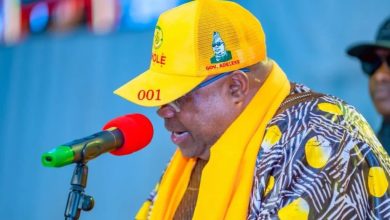
Governor Ademola Adeleke of the Peoples Democratic Party (PDP) is seeking to retain power, while the opposition parties are working to unseat the incumbent.
With voting just days away, attention is now shifting from campaign promises to the factors that could ultimately determine who emerges as the next governor of Osun State.
1. The Power of Incumbency
Governor Ademola Adeleke enters the election with the advantage of occupying the Government House.
The incumbent has spent the campaign period highlighting projects and programmes implemented by his administration while urging voters to allow him to continue his work.
The major question, however, is whether his record in office will translate into votes across the 30 local government areas.
2. Oyinlola’s Political Weight
The decision by former Osun State Governor Olagunsoye Oyinlola to support the opposition has added another layer to the contest.
Oyinlola remains an influential political figure in the state, and his movement has generated significant attention within the campaign.
The crucial question is whether his political structure and supporters can translate his endorsement into actual votes on election day.
3. APC’s Grassroots Structure
The All Progressives Congress (APC) is expected to rely heavily on its grassroots organisation, party structures and network of political leaders across the state.
For the opposition, the challenge is not only winning public support but also converting that support into votes at polling units.
In a closely contested election, strong ward-level mobilisation could prove decisive.
4. The ADC Factor
The African Democratic Congress (ADC) has also emerged as one of the parties seeking to disrupt the traditional PDP-APC contest.
Its candidate, Najeem Salam, is expected to attract voters dissatisfied with the two dominant parties.
The size of the ADC vote could become particularly important if the margin between the leading candidates is narrow.
5. Youth and First-Time Voters
Young voters remain an important bloc in Osun politics.
Issues such as employment, education, entrepreneurship, digital opportunities and the cost of living are likely to influence how many young voters approach the election.
Beyond social media activity, the real test will be whether young voters turn out at polling units.
6. The Strongholds and Battleground LGAs
The election may ultimately be decided in areas where the major parties have comparable strength.
Rather than simply winning their traditional strongholds, the parties will need to maximise their votes in competitive local government areas.
This makes election-day mobilisation, polling-unit agents and voter turnout particularly important.
7. Voter Turnout
Perhaps the biggest unknown is turnout.
A party can have strong support but still struggle if its supporters fail to vote.
Weather, security concerns, transportation, voter apathy and confidence in the electoral process could all affect turnout.
The party that succeeds in getting its supporters to the polling units could gain a significant advantage.
What Happens on Saturday?
The Osun governorship election is shaping up as a contest in which political structures, incumbency, endorsements, grassroots mobilisation and voter turnout could all play major roles.
While campaign rallies may create the impression of momentum, the real test will come when voters arrive at polling units across the state.
For the major contenders, the final hours will therefore be about one thing: converting political support into actual votes.
The big question is no longer who has the loudest campaign — but who can get the most supporters to the ballot box.