
By Our Reporter
The Revenue Mobilisation Allocation and Fiscal Commission (RMAFC) has disclosed that Nigeria spent more than ₦2.36 trillion on petrol subsidies and direct deductions from crude oil sales proceeds in 2021.
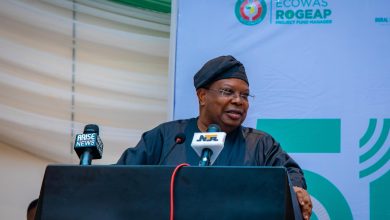
RMAFC Chairman, Dr. Mohammed Bello Shehu, made the revelation on Thursday while appearing before the Senate Public Accounts Committee (SPAC) in Abuja.
The committee, chaired by Senator Ibrahim Dankwabo (PDP, Gombe North), is investigating the 2021–2023 oil and gas industry audit reports published by the Nigeria Extractive Industries Transparency Initiative (NEITI).
Presenting the commission’s findings, Shehu said ₦1.16 trillion was spent on petrol subsidies in 2021, while another ₦1.20 trillion was deducted directly from the Federation’s crude oil sales proceeds.
He explained that the subsidy payments were among several deductions that significantly reduced revenues accruing to the Federation Account.
According to him, crude and petroleum product losses accounted for ₦16.20 billion, while ₦22.05 billion was spent on pipeline repairs and maintenance. An additional ₦6.75 billion was used for strategic petroleum stock holding.
Shehu also questioned the current method of calculating the 13 per cent derivation fund allocated to oil-producing states, describing it as inconsistent with the constitutional objective of the derivation principle.
He told lawmakers that computing the derivation fund from the balance of revenue after deductions, rather than from total collections, undermines the purpose of the constitutional provision.
“The practice of computing 13% derivation on the balance of revenue after deductions from total collections is contrary to the intention of the derivation objective,” Shehu said.
Meanwhile, the Senate committee postponed consideration of the report submitted by the Niger Delta Development Commission (NDDC) to allow members more time to study the document. The commission has been directed to return for further deliberations next Wednesday.
The panel also expressed dissatisfaction with the absence of the Auditor-General of the Federation, who neither attended the hearing nor sent a representative.
Chairman of the committee, Senator Dankwabo, warned that the National Assembly would invoke its constitutional powers to compel the Auditor-General’s appearance if he fails to honour the committee’s invitation on Tuesday.
“The Auditor-General must unfailingly appear before this committee on Tuesday next week or risk the invocation of powers of the National Assembly against him, which will lead to a forced appearance,” Dankwabo said.