Just In: Tinubu Appoints Fayose as REA Chairman, Announces 26 Fresh Appointments Across Federal Agencies
The appointments, which take immediate effect, cover 10 federal agencies and commissions, with former Ekiti State Governor Ayo Fayose leading the new board of the Rural Electrification Agency.

By Aliyu Oyewole
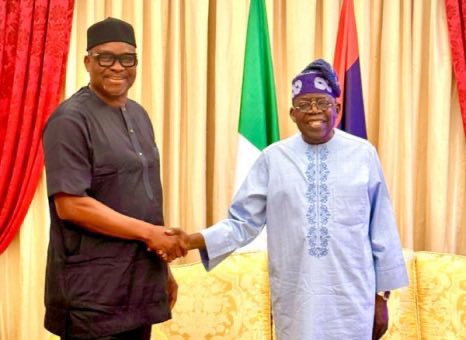
President Bola Ahmed Tinubu has appointed former Ekiti State Governor, Ayo Fayose, as the Chairman of the Board of the Rural Electrification Agency (REA), as part of 26 fresh appointments into 10 federal agencies and commissions.
The appointments, announced on Monday by the President’s Special Adviser on Information and Strategy, Bayo Onanuga, take immediate effect.
Fayose’s appointment marks one of the most notable decisions in the latest round of federal appointments. He will lead the board of the Rural Electrification Agency alongside Alhaji Ahmadu Abubakar and Engineer Ilyasu Ibrahim Makinta as members and non-executive directors. The agency’s Director-General, Abba Abubakar Aliyu, and three executive directors will complete the board.
President Tinubu also appointed Major General Junaid Bindawa (Rtd.) as Chairman of the National Salary and Wages Commission. Former House of Representatives member, Olajumoke Okoya-Thomas, was named Secretary of the commission.
Other appointments to the commission include Dr. Ogbole Ene Lilian (Benue), Oladele Olatubosun (Oyo), Yakubu Umar Barde (Kaduna), Dr. Mai Adamu Yau (Borno), Ginika Florence Tor (Enugu), Engineer Lawrence Okoh (Edo), and Bello Morenike Iyabode (Kogi).
In another development, Tosin Johnson Adeyanju was redeployed from his role as Executive Secretary of the National Lottery Trust Fund to serve as Secretary of the Revenue Mobilisation and Fiscal Commission.
The President also approved the appointment of Dr. Abuh Mohammed as Director-General of the National Population Commission, Dr. Akinola Odeyemi as Managing Director of the Nigerian Bulk Electricity Trading Company (NBET), and Dr. Anthony Inalegwu Godwin as Chairman and Chief Executive Officer of the Nigeria Atomic Energy Commission.
Engineer Julius Oloro was appointed Chief Executive Officer of the National Centre for Agricultural Mechanisation (NCAM), replacing the late Dr. A.R. Kamal, who died in January.
Tinubu further inaugurated a new board for the Fiscal Responsibility Commission with Dr. Abdullahi Maikano Saidu as Chairman. Other members include Mohammed Asmau, Mohammed Aliyu Makama, Dr. Suleiman Gidado, Louis O. Ndukwe, Amaechi Ugwele, and Olaniyi Idowu Onikola.
Additionally, Shuni Muhammad Dahiru was appointed Executive Secretary of the National Commission for Mass Literacy, Adult and Non-Formal Education, replacing Professor Shu’aibu Shehu Aliyu, who was earlier reassigned to the Petroleum Trust Development Fund.
To fill the vacant position of Executive Director (Finance) at the Federal Housing Authority, President Tinubu appointed Gisaor Vincent Iorja, an economist and legal scholar who currently serves as Secretary of the Benue State Independent Electoral Commission.
According to the Presidency, all the appointments take immediate effect.