
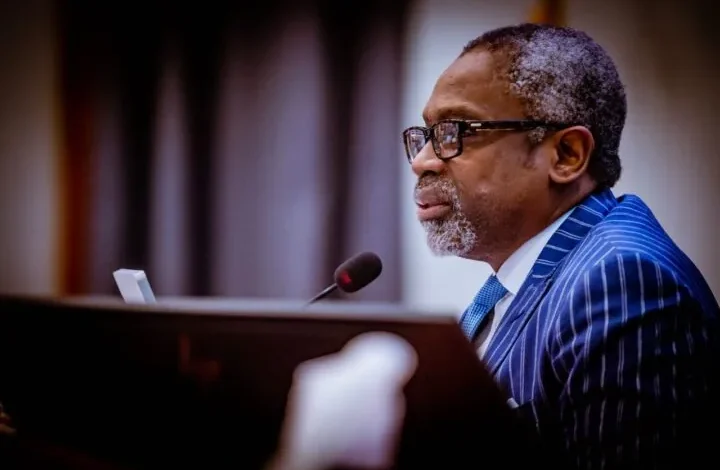
Chief of Staff to President Bola Tinubu, Femi Gbajabiamila, has acknowledged the economic difficulties confronting Nigerians, admitting that life has become challenging for many households amid the Federal Government’s economic reforms.
Gbajabiamila, however, defended the Tinubu administration’s policies, insisting that the President made difficult decisions in the country’s long-term interest rather than prioritising immediate political gains.
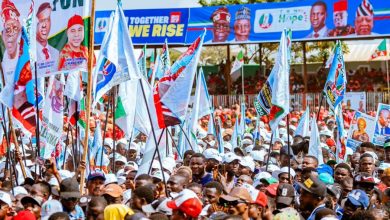
He spoke on Tuesday in Abuja during the unveiling of the Federal Government’s 2027–2031 electoral roadmap, titled From Reforms to Prosperity Agenda, ahead of the 2027 general elections.
The Chief of Staff acknowledged that the removal of petrol subsidy and the unification of the foreign exchange market had placed considerable pressure on Nigerian households.
He said the government must be honest about the hardship Nigerians are experiencing rather than dismissing their concerns.
“Now, those decisions have placed real pressure on households. We must speak honestly about that experience because the people living through it deserve to be heard. And nobody should have to pretend that life is easy at the moment,” he said.
Gbajabiamila argued that Tinubu deliberately chose to address longstanding economic problems despite the immediate consequences of the decisions.
According to him, the President could have maintained the previous economic approach to avoid public dissatisfaction but opted to confront what he described as structural weaknesses in the country’s economy.
He explained that there was a difference between politicians focused on winning the next election and leaders concerned about the future of the next generation.
“If he came in as a politician and decided to govern as a politician, he would have continued on the cruise, on the path that we were taking.
“But instead, knowing full well the immediate consequences, he decided he would govern as a leader,” Gbajabiamila said.
The former Speaker of the House of Representatives maintained that the ultimate justification for the government’s economic reforms would be their ability to improve the living conditions of ordinary Nigerians.
He described the administration’s 2027–2031 roadmap as a commitment to building an economy where hard work would translate into decent livelihoods and citizens would have equal opportunities to succeed.
Gbajabiamila also described a political manifesto as a contract between elected leaders and the people, stressing that the government must be accountable for its promises.
He cited the administration’s interventions in human capital development, social protection, taxation and electricity as evidence of efforts to expand economic opportunities.
Among the initiatives he highlighted were the N-Power programme, the student loan scheme, the government’s tax reforms and the Electricity Act, which allows states to establish and regulate their electricity markets.
He said the initiatives were designed to improve access to opportunities, reduce financial pressure on vulnerable Nigerians and encourage investment in critical sectors.
Gbajabiamila further challenged members and stakeholders of the All Progressives Congress (APC) to take responsibility for communicating the administration’s policies and achievements to Nigerians.
He insisted that the ruling party must be prepared to defend its record and convince voters through its performance rather than political rhetoric.
“The party asking to continue in government must be prepared to answer the people whose mandate it seeks.
“We must earn support through the quality of work, through the quality of our case and the seriousness of our conduct,” he said.
He added that the 2027 general election would provide Nigerians with an opportunity to decide whether to support the continuation of Tinubu’s economic reform agenda.
Credit: Daily Trust