
By Our Reporter
The Federal Government has pledged to publish a detailed account of how savings from the removal of fuel and foreign exchange subsidies have been utilised, following growing public concerns over the impact of the reforms and persistent questions about the use of the funds.
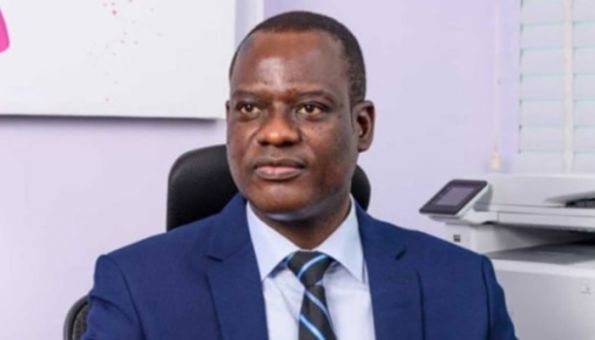
The Minister of Finance and Coordinating Minister of the Economy, Mr. Taiwo Oyedele, made the commitment on Thursday while speaking at the 7th Africa Emerging Markets Forum in Abuja.
Oyedele was responding to concerns raised by the World Bank Group’s Chief Economist and Senior Vice-President for Development Economics, Indermit Gill, who said many Nigerians remained unconvinced that the gains from the economic reforms had translated into improved living conditions.
Gill acknowledged that the Federal Government had increased revenues, reduced subsidies and narrowed the fiscal deficit, but argued that citizens still lacked clarity on how the savings had been utilised.
“It’s not clear to people whether the savings and the additional resources have been spent,” Gill said, urging the government to provide greater accountability and demonstrate how the reforms have benefited ordinary Nigerians.
He also commended the Central Bank of Nigeria (CBN) for what he described as “a superb job” in reducing inflation from above 30 per cent to below 15 per cent, while stressing that sustained progress would require stronger fiscal support from the Federal Government.
Responding, Oyedele admitted that public demands for transparency were justified and assured Nigerians that a comprehensive breakdown of the subsidy savings would be made public within days.
“There was a question about the subsidy savings. Where has it gone to? I’ve heard this question so many times. And guess what? It’s a valid question,” the minister said.
According to him, the combined savings from the removal of fuel subsidies and what he described as the “subsidy on foreign exchange” amounted to about five per cent of Nigeria’s Gross Domestic Product (GDP).
“So where has the money gone to? In a few days, you will see the detailed analysis because we believe that we owe a duty to explain what we do to the Nigerian people. That’s what transparency looks like,” Oyedele added.
The minister explained that the reforms were primarily designed to eliminate long-standing economic distortions rather than merely generate fiscal savings.
He argued that many Nigerians assessed the reforms without considering the economic consequences the country would have faced had the subsidy regime remained in place.
Oyedele disclosed that a significant portion of the savings had been absorbed by increased debt servicing costs arising from higher interest rates, the implementation of the new N70,000 national minimum wage, and expanded social intervention programmes.
Among the interventions he highlighted was the Nigerian Education Loan Fund (NELFUND), which, according to him, has provided tuition support and monthly stipends to more than 1.5 million students.
The finance minister also defended the Federal Government’s continued borrowing despite improved revenue generation.
He explained that higher revenues do not automatically eliminate the need for borrowing where government expenditure exceeds available income.
“If you have a budget to spend 10 and you have a target of revenue of six, you need to borrow four. If you collect revenue of seven, you have exceeded your revenue target, but it doesn’t change the fact that you still need to borrow three,” he said.
Oyedele maintained that borrowing remains appropriate provided the returns on the investments financed exceed the cost of the loans.
Addressing concerns over rising poverty, the minister rejected suggestions that the reforms had worsened living conditions, insisting that the increase reflected the difficult but necessary process of correcting long-standing structural distortions in the economy.
“The reform itself was a reset. We were living in fiscal illusions. So, we needed to stop deceiving ourselves so the country can move forward,” he said.
He added that the Federal Government’s priority was now to convert the country’s improving macroeconomic stability into productivity, job creation and shared prosperity.
Oyedele further revealed that the government was developing a framework aimed at reducing the cost of capital without introducing fresh subsidies.
According to him, the initiative is expected to complement the CBN’s efforts to tame inflation while encouraging investment in the productive sectors of the economy.
Also speaking at the forum, the Director of Statistics at the Central Bank of Nigeria, Dr. Okpanachi Moses, presented findings from a study covering 36 Sub-Saharan African countries.
He said the research showed that food price volatility and inflation reinforce one another, limiting the effectiveness of conventional monetary policy, particularly in fragile and conflict-affected economies.
Moses explained that households across many African countries spend between 40 and 60 per cent of their income on food, making food price shocks a major driver of headline inflation.
He advised central banks in conflict-affected countries to apply interest rate policies cautiously, stressing that investments in food production, stable supply chains and broader structural reforms would have a greater impact on containing inflation than monetary tightening alone.
He added that policy responses should be tailored to individual country circumstances, noting that reforms remain essential to strengthening inflation-targeting frameworks and improving the effectiveness of monetary policy across the continent.