He Wanted to Become a Medical Doctor, But Ended Up Leading Thousands at UI: Aweda Tells His Story

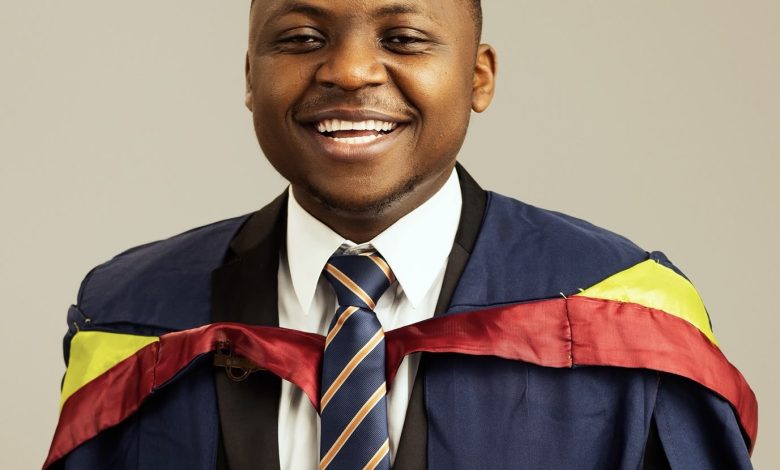
Former University of Ibadan Students’ Union President, Dr Aweda Bolaji Damilola, speaks on his journey from an aspiring medical practitioner to student leadership, the battles over school fees, his administration’s defining moments, the sacrifices of unionism and the lessons he carries beyond office.
Leadership was never part of Dr Aweda Bolaji Damilola’s childhood ambitions. Growing up in a family of three children, his dream was straightforward: to become a medical practitioner. He had little idea that years later, his journey through the University of Ibadan (UI) would place him at the centre of student politics, negotiations with university authorities and protests over issues affecting thousands of students.
Today, while many remember him as the former President of the University of Ibadan Students’ Union, Aweda’s story extends beyond the title. It is a story of gradual involvement, responsibility, difficult decisions and the realities of representing a diverse student population.
A graduate of Veterinary Medicine from the University of Ibadan, Aweda describes himself as someone who enjoys engaging with people, exchanging ideas and contributing to the development of his immediate environment. For him, leadership was not something he deliberately pursued from childhood but a responsibility that gradually emerged from his willingness to get involved.
His early upbringing played a significant role in shaping that disposition.
Although his father, a civil servant, was often away from home because of work, he made every opportunity with his children count. One lesson remained particularly important: never settle for being a local champion.
His parents also raised their children with a strong culture of generosity, encouraging them to share whatever they had, whether material possessions, time, advice or personal effort.
Looking back, Aweda believes these values influenced his relationship with people and his desire to contribute meaningfully wherever he finds himself.
FROM A CHILDHOOD DREAM TO THE UNIVERSITY OF IBADAN
For someone who had always wanted to attend the best schools, gaining admission into the University of Ibadan was a natural progression of an ambition nurtured from childhood.
His experience at Iganmode Grammar School had exposed him to an environment where academic excellence and competition were encouraged. As he approached university admission, UI stood out as his preferred destination because of its reputation as one of Nigeria’s leading institutions.
But his undergraduate experience was far from perfect.
Describing it as bittersweet, Aweda recalls moments of disappointment alongside memorable experiences, friendships and opportunities for personal development.
More importantly, the university introduced him to brilliant individuals from different backgrounds and exposed him to the complexities of student life.
It was also where his journey into leadership began, although he initially had no intention of becoming Students’ Union President.
His first major involvement in student politics came through his hall community at Tedder Hall, where he contested for the position of Information Minister. He subsequently became President of the Literary and Debating Society before eventually emerging as President of the Students’ Union.
It was a progression built on participation rather than a carefully designed political ambition.
“I have always been someone who gets involved wherever I find myself,” he explains, recalling how he gradually assumed responsibilities within different student communities.
By the time he considered contesting for the Students’ Union presidency, he had already developed considerable experience in student administration.
Having worked with three successive Students’ Union administrations, he understood the Union’s structure, some of its challenges and the responsibilities associated with its leadership.
He believed he had the experience and understanding required to move the institution forward. The students eventually agreed, giving him their mandate through the ballot.
A PRESIDENCY DEFINED BY SCHOOL FEES AND STUDENT PROTESTS
Aweda’s administration inherited an immediate challenge: the controversy surrounding the increment in school fees.
It was an issue that affected virtually every student and quickly became the defining concern of his administration.
According to him, tackling the increment and its consequences became the administration’s foremost priority, alongside the broader objective of making the Students’ Union more relevant to students’ everyday experiences.
However, leading a student movement while studying Veterinary Medicine was no easy task.
His journey to the presidency itself had been demanding. During his campaign, he was writing his second professional examinations, which coincided with almost four weeks of intensive academic activities.
He recalls having to finish examinations, attend campaign activities, participate in screenings and engage students, sometimes within the same day.
He credits his friends and supporters for helping him navigate the demanding period. While classmates assisted him academically, those outside the classroom took up significant campaign responsibilities.
Without their support, he admits, combining both commitments would have been considerably more difficult.
That experience would later become a recurring feature of his presidency: balancing academic obligations with the enormous demands of student representation.
One of the achievements he particularly remembers was the administration’s ability to mobilise students around issues affecting them, restoring a level of collective participation that, according to him, had not been witnessed on that scale in approximately seven years.
Among the notable interventions was a protest at the University College Hospital (UCH) over a prolonged electricity blackout.
The demonstration attracted the attention of the then Minister of Power, who visited and promised that electricity would be restored within 24 hours. Aweda says the promise was fulfilled.
His administration also pursued partnerships aimed at improving the welfare and capacity of students.
One such partnership with itel Nigeria resulted in the donation of a solar inverter system to the Students’ Union and the training of students in solar installation.
For Aweda, these interventions represented a broader vision of unionism that went beyond issuing statements or organising demonstrations.
He wanted a Union that could mobilise students, engage relevant stakeholders and pursue practical solutions to challenges confronting the university community.
THE SEPTEMBER 2024 PROTEST: A DECISION WITH CONSEQUENCES
Every administration has defining moments, but some decisions carry consequences that remain difficult even after the immediate controversy has passed.
For Aweda, one such moment was the September 2024 protest, which eventually resulted in the closure of the University of Ibadan for three weeks.
He describes it as the most difficult decision he had to make during his tenure.
The circumstances were complicated. Some students were yet to pay their school fees, while examinations were scheduled to commence the following week. He understood that a prolonged closure would disrupt academic activities and create additional difficulties for students.
Yet, the issues that necessitated the protest could not simply be ignored.
As Students’ Union President, he had to weigh the consequences of taking action against the responsibility of representing students who expected their interests to be defended.
It was a difficult position, particularly because whichever decision the leadership made would have consequences for the university community.
The school fee controversy remained the most demanding challenge of his administration, requiring consultations, negotiations, engagements and, at different points, firm positions.
But the experience also exposed the complexities of student leadership: the responsibility to act, the pressure to negotiate and the reality that decisions taken in the interest of a group may not always satisfy everyone.
BETWEEN DIALOGUE AND CONFRONTATION WITH MANAGEMENT
One of the criticisms levelled against Aweda’s administration was the perception that it was too close to the university management.
Some students reportedly viewed the administration as pro-management, particularly because of its willingness to pursue dialogue and maintain engagements with university authorities.
However, Aweda rejects the suggestion that constructive engagement necessarily undermines the principles of unionism.
He argues that student unionism should not automatically be defined by confrontation, insisting that dialogue and protest are both legitimate tools when used in pursuit of students’ interests.
“Unionism is not anti-management,” he says, explaining that collaboration between university authorities and student representatives is necessary for improving the overall student experience.
Nevertheless, he draws a clear distinction between maintaining a cordial relationship with management and compromising the interests of the people who elected him.
According to him, student representatives must never betray their constituents simply to maintain favourable relationships with university authorities.
“You can disagree with the management, engage them, negotiate with them and still maintain mutual respect,” he maintains.
For Aweda, the effectiveness of a Students’ Union should not be measured by the frequency of confrontations but by its ability to achieve meaningful results for students.
He also believes that Nigerian student unionism has evolved over the years. While the traditional culture of frequent protests remains part of its history, contemporary unionism increasingly incorporates dialogue and negotiation.
The method, he argues, should not become more important than the objective.
If dialogue can achieve what previous generations achieved through protests, then the ultimate consideration should be whether students’ interests are being protected.
THE REALITIES OF POWER, ACCOUNTABILITY AND LEADERSHIP
Beyond protests, negotiations and administrative achievements, Aweda says his presidency taught him some fundamental lessons about power and accountability.
His understanding of power is particularly straightforward: it is temporary.
He believes anyone occupying a leadership position must recognise that the office will eventually belong to someone else.
What matters, therefore, is not simply the authority attached to the position but the legacy left behind.
On accountability, he maintains that the mandate he received belonged to the students and not to him personally.
Having been elected by the generality of students, he understood that he was answerable to them throughout his administration.
His philosophy of leadership is equally centred on collective responsibility.
Describing leadership as being “the leader in the ship”, he argues that everyone must share a common destination and work towards achieving it.
A leader cannot accomplish much by assuming that every responsibility must rest on his shoulders.
This understanding also informed how he approached the relationship between academics and union activities.
Aweda says he never forgot that his studentship was the foundation upon which his presidency existed. Consequently, he made efforts to protect his academic commitments even when the demands of the Union became overwhelming.
He learnt to take advantage of available time, particularly because the demands of student leadership could change unexpectedly.
A relatively quiet day could quickly turn into one filled with emergencies, meetings and issues requiring immediate attention.
His experience, therefore, taught him the importance of preparation and making productive use of every available opportunity.
THE PROMISES LEFT UNFULFILLED
Like many leaders who leave office, Aweda acknowledges that his administration did not achieve everything it intended to accomplish.
He admits that several promises remained unfulfilled, explaining that the realities of leadership often differ significantly from the plans made before assuming office.
According to him, unexpected challenges frequently emerge, forcing leaders to redirect their attention and resources towards more immediate concerns.
“The problems you encounter in office will not read your manifesto before coming to you,” he says.
It is an observation that captures one of the central difficulties of public leadership: the ability to respond to unforeseen circumstances while remaining committed to long-term objectives.
Reflecting on what he would do differently if given another opportunity, Aweda says he would be more deliberate about taking certain decisions earlier rather than allowing issues to linger.
He believes experience has helped him appreciate the importance of timely decision-making, particularly when difficult situations require clear direction.
LIFE AFTER THE UNION PRESIDENCY
Leaving office brought Aweda back to a relatively private life.
With fewer public engagements and less of the pressure associated with student leadership, he had more time to concentrate on his personal relationships, academics and other interests.
Nevertheless, he believes his experience as Students’ Union President continues to influence how he approaches people, responsibilities and challenges.
Representing thousands of students exposed him to different personalities, competing interests and the complexities of collective decision-making.
Those experiences, he says, are lessons he will continue to draw upon regardless of the capacity in which he finds himself.
He also has a message for students considering leadership positions: service must come before personal ambition.
According to him, seeking public office simply because of the prestige associated with the position is one of the quickest ways to disappoint both oneself and the people being represented.
Leadership is not always glamorous. It comes with difficult decisions, criticism, personal sacrifices and moments when the interests of others must take precedence over personal comfort.
He particularly wants students to appreciate the sacrifices that often remain invisible.
Behind public appearances, meetings, protests and engagements with university authorities are sleepless nights, missed lectures, postponed personal plans, difficult conversations and the mental pressure of representing thousands of people.
However, he is careful not to present these sacrifices as an excuse for poor performance or a reason to demand sympathy.
They are part of the responsibility voluntarily accepted by anyone who seeks the mandate of the people.
He also believes students should understand that their representatives are students themselves, with academic, financial, personal and social challenges of their own.
“They are not superhumans,” he says.
RETHINKING NIGERIA’S EDUCATION SYSTEM
Beyond his experiences within the University of Ibadan, Aweda believes Nigeria’s education system requires fundamental reforms to prepare students for the realities of the modern world.
His foremost recommendation is that the country’s educational structure must become more responsive to 21st-century demands.
He argues that the system should move beyond memorisation and examination success to prioritise critical thinking, creativity, problem-solving, research and the practical application of knowledge.
He is particularly concerned about the changing nature of employment and the growing influence of artificial intelligence, automation and emerging technologies.
According to him, universities must prepare students for the job market ahead rather than simply train them for existing opportunities.
He also advocates stronger collaboration between universities, industries and research institutions, alongside increased investment in laboratories, libraries, research facilities, digital infrastructure and competent academic personnel.
For him, access to quality education must also remain a priority, stressing that financial circumstances should not determine who gets the opportunity to acquire a good education.
Ultimately, he believes education should be treated as more than a pathway to obtaining academic certificates. It should equip individuals with the knowledge, skills and confidence to contribute meaningfully to society and compete globally.
A LEGACY BEYOND THE TITLE
When asked what he hopes people will remember about his time as Students’ Union President, Aweda returns to the same principle that shaped his journey into leadership: service.
He hopes students will remember his commitment to improving their experience, his willingness to stand up for them when necessary and the seriousness with which he approached the responsibility entrusted to him.
Beyond occupying an office, he wants his administration to be remembered as a period when students were reminded that their voices mattered and that the Students’ Union could serve as a meaningful platform for defending their interests.
Interestingly, his assessment of his administration is not an attempt to present a perfect record.
Asked to rate his administration out of 100, he awards it 70.
He acknowledges that there were unfulfilled promises, decisions that could have been handled differently and opportunities that might have produced better outcomes.
Nevertheless, he believes the administration made its efforts within the resources available and the circumstances surrounding its tenure.
His assessment reflects an acknowledgement of both the accomplishments and limitations of his time in office.
And perhaps that is where his story finds its most significant lesson.
From a young man whose childhood ambition was to become a medical practitioner to a student leader navigating protests, negotiations and the expectations of thousands, Aweda Bolaji Damilola’s experience illustrates that leadership is not always about having all the answers.
Sometimes, it is about accepting responsibility, making difficult choices, learning from mistakes and understanding that the office you occupy today will eventually become someone else’s responsibility.
For him, the ultimate measure of leadership is not the title that follows a name, but the service that remains long after the title is gone.