2027: Makinde Unveils ‘Reset Nigeria’ Manifesto, Says Leaders Lack Ideas

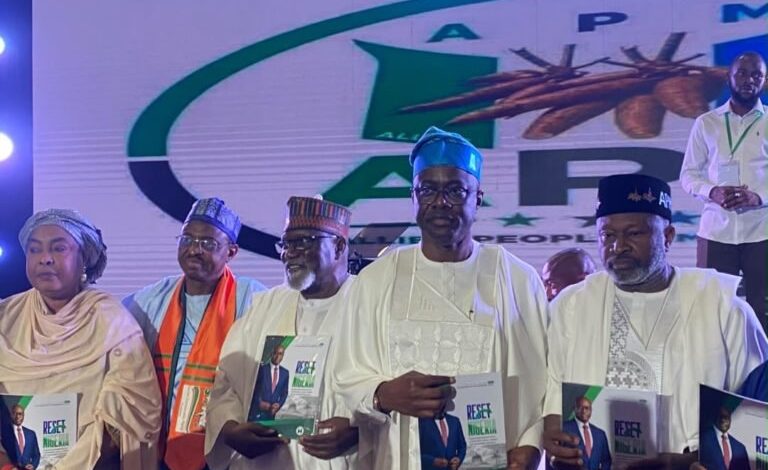
Oyo State Governor and presidential candidate of the Allied Peoples’ Movement (APM), Seyi Makinde, has unveiled his manifesto ahead of the 2027 general elections, declaring that Nigeria’s greatest challenge is not a shortage of resources but a lack of innovative leadership.
Makinde made the declaration on Wednesday in Abuja during the unveiling of his manifesto, where he presented his proposed policy direction for addressing the country’s economic, political, social and institutional challenges.
Speaking at the event, the governor argued that Nigeria possesses sufficient natural and human resources to become a prosperous nation but has continued to struggle because of what he described as a deficit of ideas among its political leaders.
“Nigeria has the resources and the capacity to achieve greatness. Nigeria is rich in natural resources and human resources, but our leaders are poor in ideas,” Makinde said.
He added that the central objective of his proposed administration would be to make governance more responsive to the everyday needs of Nigerians.
“Our simple proposition is that government must make life easier for the people. That is all,” he stated.
The APM presidential candidate said his decision to seek the presidency was informed by several challenges confronting the country, including economic reforms that have yet to translate into improved living conditions, weak public institutions and widespread poverty.
He maintained that economic progress should not be measured solely through macroeconomic indicators but should reflect tangible improvements in citizens’ welfare.
According to him, economic stability must translate into affordable food, employment opportunities, improved incomes and a reduced cost of living.
Makinde also identified the high cost of electricity and energy as major obstacles to business growth, particularly for manufacturers and small-scale enterprises that depend heavily on diesel-powered generators to sustain their operations.
He expressed concern that the unfavourable business environment was pushing some Nigerian businesses to relocate to other countries, arguing that government must address the structural costs affecting production and investment.
On petroleum pricing and rising international crude oil prices, the governor questioned why ordinary Nigerians should continue to bear the burden of increasing global oil prices without enjoying corresponding benefits.
He also criticised the Federal Government over the persistent electricity challenges, insisting that political leaders must take responsibility for their promises rather than shift blame to state governments.
Beyond economic reforms, Makinde called for stronger public institutions and greater accountability in governance, proposing that every political promise should be linked to a responsible institution, a clear delivery plan and measurable outcomes that citizens can independently assess.
He disclosed that his proposed administration would establish performance targets within its first 100 days in office, with its achievements subjected to public scrutiny.
The governor also raised concerns about Nigeria’s electoral arrangement, arguing that the current system could produce presidents without sufficient support from the majority of voters, thereby creating room for political compromises that could weaken democratic institutions.
He proposed a transitional government of national unity that would bring together representatives of different segments of society to discuss and agree on the country’s future political and constitutional direction.
Makinde’s running mate, Lawal Daura, also advocated inclusive governance, stressing that Nigeria’s democracy could only thrive in an atmosphere of peace, security, stability, prosperity and respect for democratic rights.
Daura warned against attempts to suppress opposition political parties, maintaining that a strong opposition was necessary for reducing political tension and strengthening democratic governance.
He described opposition parties as complementary to government rather than enemies of the state and called for a national conversation involving political parties, government representatives and other stakeholders to address the country’s challenges.
The unveiling was also attended by political stakeholders, including the National Chairman of the Social Democratic Party (SDP), Sadiq Gombe, who described Makinde as a shining light of the opposition.
APM National Chairman, Yusuf Dantalle, urged Nigerians to resist attempts to use state institutions to undermine democracy, noting that the country’s future should take precedence over individual political interests.
He also expressed concern over the worsening security situation, particularly the growing threat of kidnapping, which he said had made ordinary activities increasingly difficult for citizens.
The manifesto unveiling marks another major step in Makinde’s preparation for the 2027 presidential election, as he seeks to present his proposed alternative to the current direction of governance in Nigeria.